
CHF 11.3M
Operating Revenue 2025
Bottom of the Super League. GC has the thinnest revenue base in the league.
The new old GC. 140 years, 27 league titles, 19 cup victories. The Bridge Football Group has taken over GC and made community anchoring a top priority. We are structurally bringing the community to where it belongs: Into a Zurich cooperative alongside the Grasshopper Football Foundation. One club, three levels, one goal.






Bridge is inheriting a substance that urgently needs a community base. Here are three figures from the official 2025 SFL financial overview - the starting point the new ownership begins with.
Bottom of the Super League. GC has the thinnest revenue base in the league.
The largest loss in the league. More than double the second-worst figure.
The thinnest cushion of any club not already in the red.
Source: Swiss Football League - Financial overview for fiscal year 2025 (reporting date 30 June or 31 December 2025), in thousand CHF, excluding player transfers.
On 29 June 2026, Bridge Football Group Switzerland AG acquired 96.47 percent of Grasshopper Club Zürich from LAFC. The CEO is Ludovic Deléchat - former FIFA lawyer, based in Zurich, GC fan since childhood. The Grasshopper Football Foundation remains a minority shareholder and safeguards club name, brand and identity. Deléchat has publicly made community anchoring a top priority: «People who are rooted in Swiss football, in the club, and in the city of Zurich should actively help shape GC.» This is precisely why we exist. We are structurally organising the Zurich Hoppers - so the new leadership has concrete counterparts.
On 29 June 2026, Bridge Football Group Switzerland AG acquired the LAFC stake in Grasshopper Club Zürich. Based in Wil SG, CEO Ludovic Deléchat. The SFL integrity review has been passed. Multi-club network: GC (flagship), FC Den Bosch (Netherlands), Pro Vercelli (Italy), Shaanxi Union (China).
The Grasshopper Football Foundation remains a minority shareholder. It institutionally protects club name, crest, colours, home ground and brand rights - regardless of who holds the majority.
Deléchat: «For us, this is now year zero.» And: People rooted in Swiss football, in the club, and in Zurich should actively help shape GC. This public commitment is the starting point. We deliver the structural answer - a Zurich community cooperative alongside the foundation.
A Blick poll of 3,500 participants makes it clear: The overwhelming majority of Hoppers want GC back in Swiss hands. Only 9% would keep LAFC. That is the mandate.
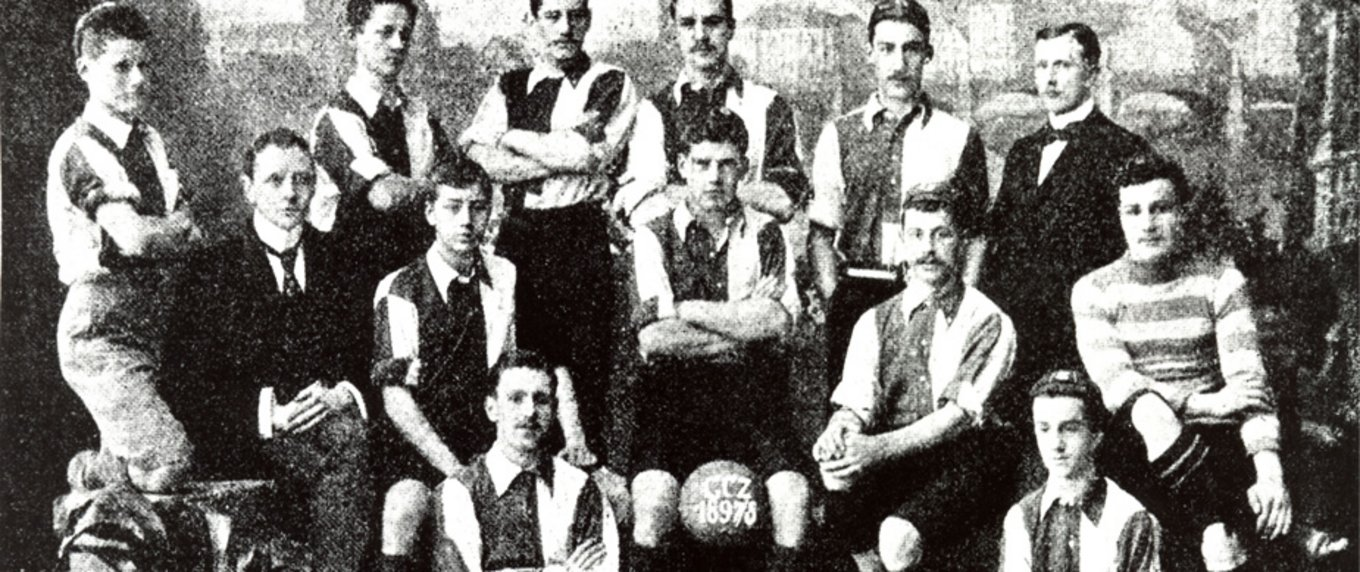
Tom E. Griffith - an English silk-merchant student - founded us in 1886 in Zürich. We played in blue and white because those are the colors of this city. History doesn't end just because an investor grows tired.
Tom E. Griffith founds Grasshopper Club Zürich on September 1. Blue and white from the city coat of arms, the grasshopper as the club's emblem. The first football club in the city, the second oldest in Switzerland - an idea that would endure.
First Swiss champion in club history. Followed by 1900 and 1901 - GC shapes what Swiss top-flight soccer means from the very beginning.
The start of a cup dynasty. By 1946 the Hoppers had claimed eleven cup wins - including four in a row (1940–1943). The cup became GC's trophy par excellence.
On April 28, 1929, the Hardturm Stadium opens - the home ground whose heart beats for the club for 78 years. Also a venue for the 1954 FIFA World Cup. The Hardturm becomes synonymous with GC - home to generations of Hoppers.
Three times in seven years GC wins both the league title and the cup in the same season. A dominance under legendary coach Karl Rappan that the club would build on further with additional doubles - eight in total throughout its history.
51,000 spectators at the Wankdorf Stadium in Bern watch GC in the deciding match against FC Basel - 4:3 after extra time, the 16th league title under coach René Hüssy. After a 15-year wait, a night no one forgets - and the foundation for the golden eighties.
In the 1977/78 season GC reaches the UEFA Cup semifinal against SEC Bastia - the best international result in club history. The Hoppers only exit on away goals; the club competes at the top level in Europe.
In the second round of the European Cup of Champions, GC hosts the Spanish record holders at Hardturm - and wins 2:0 against Real Madrid on November 1, 1978, in front of 28,000 fans, both goals scored by Claudio Sulser. After the 1:3 in the Bernabéu (Sulser goal in the 59th minute), the aggregate is 3:3 - GC advances on away goals, knocking Real Madrid out of European competition. Only Nottingham Forest, the eventual cup winners, stop the Hoppers in the next round. One of the greatest European nights in Swiss football history.
1982, 1983, 1984: GC becomes champion three years in a row - with three different coaches. Timo Konietzka claims the title in 1982, Hennes Weisweiler the double in 1983 (he passes away shortly afterward), Miroslav Blažević completes the hat-trick in 1984. An era that lives on in collective memory.
GC qualifies for the Champions League two years running. In 1995/96 Zürich faces Ajax, Real Madrid, and Ferencváros in the group stage; in 1996/97 they face Ajax, Auxerre, and Glasgow Rangers. The Hoppers test themselves against Europe's elite - and in 1996/97 beat Ajax, Auxerre, and Rangers at Hardturm.
May 31, 2003, Neufeld Stadium, Bern: GC beats Young Boys 4:2 and seals the 27th and most recent league title - led by top scorer Richard Núñez (27 goals) and Mladen Petric (13). What came after: Changing owners, many transitions, no consistent plan. But the Hoppers never disappeared - they were waiting.
1:1 after extra time, 4:3 on penalties against FC Basel at Stade de Suisse - GC brings the cup back to Zürich. To this day, the last major trophy. A title that proves: GC can still do it.
Bridge takes over the club, the foundation safeguards identity and brand, the Hoppers organise themselves as a cooperative. Three levels, one Zurich axis - this makes community anchoring structural, not symbolic.
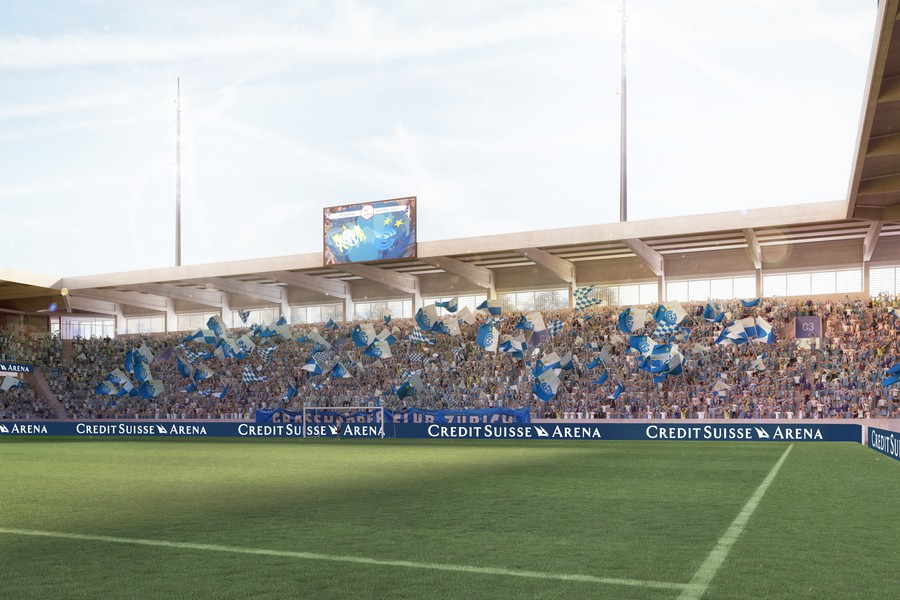
We think in decades, not seasons. By 2036, Grasshopper Club Zürich will have established itself as a sportingly, financially, and culturally sustainable and resilient institution - one of Switzerland's most beloved sports brands. This through exemplary youth development, a profitable transfer policy, an attractive and effective playing philosophy, efficient commercial management, and deep regional and national roots. GC needs at least ten years - we will give them to it.
The academy as the sporting heart. Identity over mercenary culture - the youth teams carry the first team.
Develop talent, build value, sell smartly. The club finances itself through its own efforts - not from the pocket of a single patron.
27 league titles, 19 cup victories, two Champions League group stages. Success on the pitch - consistently sporting, culturally independent.
Anchored in Zürich, connected across Switzerland. One of the country's most beloved sports brands - carried by the Hoppers, protected by the foundation, led by a reliable ownership.
Bridge carries sport and budget. The foundation protects identity and the traditional brand. The Hoppers make the community structurally visible - as a Zurich cooperative alongside the foundation. One club, three ownership levels, one goal.
After the Bridge takeover, the ownership logic has been recalibrated. We deliver the third level - the one that has been missing until now: The organised Zurich community, negotiable and anchored for the long term.
New majority owner (96.47%). Based in Wil SG, CEO Ludovic Deléchat. Carries sporting strategy, transfer policy, business plan. Responsible for the operational and financial direction of the club. SFL integrity review passed.
Remains a minority shareholder in Grasshopper Football AG. Institutionally protects club name, crest, club colours, home ground and brand rights - regardless of who holds the majority.
A Swiss cooperative targeting 20,000+ Hoppers members. One vote per person, heritable to the next generation. The institutional counterpart for Bridge and the foundation on community matters - negotiable, transparent, organised for the long term.
The cooperative and the Grasshopper Football Foundation enter into a long-term cooperation agreement: The Hoppers organise the community base and Zurich outreach; the foundation contributes its statutory identity clause. A bound, joint presence towards Bridge and in public - not a separate side project, but structurally anchored. This turns community anchoring from marketing into governance.
Bridge carries sport and budget. Full responsibility for squad, coaching, investments, transfer policy, and business plan. Deléchat has made clear: No shortcuts, this is a multi-year project.
The foundation protects identity. As a minority shareholder, the Grasshopper Football Foundation institutionally secures club name, crest, colours, home ground and brand rights - no matter who holds the majority.
The cooperative makes community structurally visible. 20,000+ Hoppers, organised in a Swiss cooperative, with a long-term cooperation agreement with the foundation - that's the negotiable counterpart GC hasn't had until now.
A Swiss cooperative, carried by 20,000+ Hoppers. One person, one vote, heritable to the next generation. Contributions are shares in the Hoppers cooperative - not in Grasshopper Football AG. The link to the club is formed through the cooperation agreement with the Grasshopper Football Foundation.
GC won't reclaim what was lost by continuing as before. Six points we stand by - because without them, nothing holds.
Community anchoring must not remain marketing - it belongs structurally in governance, through the cooperative alongside the foundation.
Transparency inside and out. An ambitious, long-term vision that all stakeholders can identify with.
No flash in the pan, no chaos. GC needs focus and time to become again what it once was.
The Grasshopper Football AG run lean, modern, and efficiently. A diverse management team with the skills for the new GC - intrinsically motivated, with a culture of trust.
Repositioning in the market. Reinvigorating an established but faded brand. Waking the dormant Hoppers, inspiring longtime fans with a new spirit.
Fill the stadium again - the foundation for financial stability and sporting success. Open up additional revenue streams and use the Bridge network (Den Bosch, Pro Vercelli, Shaanxi Union) intelligently, without losing Zurich identity.
«Eight young men founded Grasshopper Club Zürich in 1886. They left us a club greater than any balance sheet: record champions, a home, 140 years of history. GC now has new owners - and they are ready to bring us Hoppers in structurally. We are seizing that chance. We are organising ourselves. So that the club remains what it always was: ours.»
Today this is a non-binding expression of interest - no purchase, no contract, no money transfer. We will be in touch as soon as the cooperative is officially founded in its current form as a Zurich community cooperative alongside the Grasshopper Football Foundation, and will collect your binding subscription in Swiss francs.